Blog

Eye Rolling: A Health Hazard? (Part 4)

You can’t eliminate ostracism experiences in the workplace unless you replace people with robots.

Still, an organization has a ‘duty of care’, i.e. an obligation to provide a workplace that is free of health and safety hazards. To chart your organizational response, start by asking these questions:

  1. What do we see as our obligation to our employees?
  2. How do we apply our organizational values in this arena?
  3. How do we identify ostracism?
  4. How effective are our leaders at modelling inclusiveness?
  5. What preventive practices can we build into our culture to inhibit/reduce ostracism?
  6. What policies do we need to have in place to prevent and deal with ostracism?
  7. How can we take effective action, without falling into ‘policing’ or ‘political correctness’?

With behaviours ranging from subtle to blatant, ostracism poses complex organizational challenges. As you now know, new scientific evidence proves that the risk of doing nothing may be more costly to your organization than previously realized.

(PS. For an almost-identical article that was published in the Canadian HR Reporter this week, click here)


 Feel free to contact me anytime.

If you are managing someone who is an abrasive leader, or if you are a manager who was told that you are abrasive – we are always here to help with a (free) perspective or input. 
Eye Rolling: A Health Hazard? (Part 3)

Scan your environment and you’ll readily see that in your workplace, ostracism can be found everywhere. Specifically, there are four prevalent situations that by their very nature will trigger ostracism experiences:

  1. Biased managers. When a manager ‘plays favourites’ or maintains personal friendships with some direct reports, those who are excluded will experience ostracism.

  2. Diversity. Those who perceive themselves as ‘different’ often feel rejected or excluded. And sometimes it is a member of a ‘majority’ who feels ostracised. For example, a common complaint I hear when I consult or facilitate training pertains to people speaking a foreign language amongst themselves. The English-speaking person beside them often feels excluded and rejected.

  3. Incivility. Every workplace is hampered by some degree of gossip, cliques, skipping of hello’s and thank you’s, rude use of mobile devices and, yes, eye rolling. Despite their seemingly inconsequential nature, these incivilities have serious organizational effects. In a 2011 survey I designed in collaboration with HR Reporter Magazine, 93% of respondents said that incivility impacted on productivity, 79% noted it affected absenteeism and 90% said incivility affected inter-depart­mental collaboration. What the work of Dr. Kipling and his colleagues tells us is that incivility actually hurts, on more than one level.

  4. Bullying. When ostracizing behaviours are repetitive, especially if the behaviour is intentional and targeted, it amounts to full blown workplace bullying. The repetitive nature of ostracism in its bullying form can render people physically and psychologically ill, and they’re often unable to work at all. Essentially, bullying is cyberball magnified a million times.

Next week: Great questions for leaders and HR professionals to consider in the ostracism arena.


Need help with challenges in your organization? Don’t hesitate to contact us

Eye Rolling: A Health Hazard? (Part 2)

Consider this: what is the common denominator between a teacher removing a child from her peers, a religious institution excommunicating a deviant member, and a husband giving his wife ‘the silent treatment’?  

Answer: all three practices are ostracism tactics that have withstood the test of time, across cultures and religions. They have survived because exclusion is an unbearable threat. Our species are hardwired to respond acutely to any signs of excommunication, because from the beginning of time, any sign of rejection by the tribe carried the threat of being physically banished from the community, left to fend for ourselves in harsh circumstances. From an evolutionary perspective, you’re one of the tribe or you perish.

Dr. Kipling Williams, a leading researcher on Ostracism, speculated that humans are equipped with extremely sensitive sensors for detecting even the most remote signal of potential removal from the tribe. He set up fun experiments where, for example, an unsuspecting subject walks into an elevator and either gets acknowledged by those already riding in it (‘inclusion version’), or is ignored by them (‘ostracism version’). Surprisingly, even in such seemingly inconsequential circumstances, those who were subjected to the ostracism version showed a momentary downturn in mood immediately afterwards.

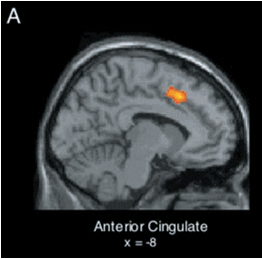
 In a series of ‘cyberball toss’ experiments for which he became known, Dr. Williams and his colleagues placed a subject under an fMRI and asked him or her to play a game of virtual toss-ball with two other people. Those fictional people were  represented  by cute little animated screen figurines. When the other players excluded the experiment’s subject from their game for as little as three minutes, the subject’s Anterior Cingulated Cortex (ACC) became fired up, exactly as it would have flared up had someone smashed their finger with a hammer (see Williams’ research images below). Just imagine, all fired up because of a totally inconsequential game, played for less than three minutes, with imaginary people you can’t see and will never meet!


The recent research on ostracism, social exclusion, and rejection consistently demonstrates that even seemingly insignificant rejection experiences create a temporary state of misery, real pain, stress, sadness and anger, along with lower levels of belonging, self-esteem, control, and meaningful existence.

Next week:  those typical workplace situations that will predictably and reliably produce ostracism experiences.

Eye Rolling: A Health Hazard? (Part 1)

Be honest, admit it. Someone on a team that you belong to was behaving in their usual irritating way. Fed up and annoyed, you looked at another colleague and rolled your eyes. No big deal, just a spontaneous and totally harmless venting of authentic feelings.

But if Dr. Kipling Williams of Purdue University were in the vicinity, he’d be rushing into the scene, eager to study that annoying person’s reactions to your eye rolling. He’d be examining their brain under a Functional MRI machine to check which parts got activated when that person was subjected to your eye rolling. And he’d administer tests to trace your behaviour’s exact impact on that person.

And here’s the fascinating part: Dr. Williams, a leading researcher on Ostracism, will later be able to show you how the person’s dorsal anterior cingulated cortex (dACC) got fully activated in reaction to your eye rolling. If someone banged their finger with a hammer, that’s exact dACC brain area would get fired up.  He’ll relay that the tests demonstrate a statistically significant reduction in that person’s sense of self-worth. Even more interesting, he’ll note a significant drop in the person’s finger temperature. (It is no coincidence that we use terms like “out in the cold” or “receiving the cold shoulder” to describe the experience of rejection.)

In short, research will demonstrate that the experience of ostracism has significant mental and physical health implications.

Next week: Dr. Williams’ fun and compelling experiments on Ostracism (or: if your brain were put under an MRI while you experienced a seemingly inconsequential and exclusion, what would the MRI results show?)


Need help with challenges in your organization? Don’t hesitate to contact us

“That’s Not Fair!”: Who Do You Become When You’re Treated Unfairly?

Which of the following do you typically do when you think your manager (or organization) has treated you unfairly:

  1. Mentally ‘check out’ and withdraw
  2. Get angry and combative
  3. Vent your frustration to others
  4. Get all upset and emotional
  5. Use self-talk to sooth yourself (things like ‘it’s only a job’, or maybe ‘this is what organizations have always done and will do, there’s no point in getting upset’.)
  6. Engage in small acts of sabotage that are serious enough to cause damage, but sufficiently ambiguous to prevent you from getting into trouble
  7. Feel amused and move on
  8. Raise the matter constructively using the appropriate organizational channels
  9. Organize a mutiny

In a leadership development session I recently facilitated, the issue of ‘how we respond when our innate sense of justice is violated popped up in an unexpected and very real way. This prompted a rich conversation as we analyzed together how participants each respond in situations where the leadership acts in what is perceived to be an unfair fashion.

In organizational life, leaders often get into ‘hot water’ when actions they take violate people’s sense of innate fairness. In fact, there are four distinct types of Perceived Justice that, when breached, lead people to feel this way. If as and organization or as an individual leader you are going to act in ways that are perceived as unjust, be prepared to pay the price. The reaction will be any or all of the above nine options – and more. (And by the way, you typically will not even know that you had been perceived as unfair until you encounter the reaction!). Each individual will respond in their own way, depending on the variables of the situation. And once you’ve done it, your damage control activities will need to address all these many reactions, because if you don’t do so, people will be so busy being upset, or reactive, or vengeful, or ‘vent-full’, that no one will be doing any real work!

Meanwhile, if you’re the one who is on the receiving end of what you perceive to be unfair action by management, which of the above reaction grooves do you typically tend to experience? Do you like who you become in those situations? Or perhaps it’s time to change your reaction and move on?


Don’t hesitate to contact us with any questions or to ask about our services.


Where’s Your Compass Pointing?

It’s Family Day weekend in Ontario and I invite you to conduct a quick self-scan: are you experiencing stress symptoms? Having ‘relationship Issues’? Feeling trapped or suffering from a diminished sense of meaning? Is your work performance not what it should be?  

If you answered yes to any of the above, there’s a good chance that you’re afflicted by a common malaise – an unbalanced life. So it’s time to get your compass out of its dusty drawer, equip yourself with the relevant navigational terms and recalibrate your life.

True North is a navigational term referring to the Geographical North Poll —  the actual geographic location of the North Pole. Its location is constant and never changes. (Maps are aligned to True North.)

Magnetic North, on the other hand, refers to the direction of the Earth’s magnetic field, which tends to shift over time. Contrary to common perception, a compass needle points to this poll, not to True North. When you’re aligned to Magnetic North, you tend to run about your life like a headless chicken, always tending to whatever seems most urgent in the moment and losing the comforting sense of balance and equanimity.

If you want to lead a balanced, sane life, I advise you to keep your True North priorities constantly top of mind. Manage your daily realities in ways that are harmonious with your True North, not the fleeting priorities and irresistible pulls of Magnetic North.

As Lao Tzu said, ‘the journey of a thousand miles begins with a single step”. So here are two deceivingly simple questions to help get you started:

  • What is one thing you can do today to align yourself more closely with your True North?
  • What is one thing you can do this week to align yourself more closely with your True North?

Enjoy your weekend, wherever you are!

Blackberry in the John

RIM might be in trouble, but that doesn’t change the fact that you might already be a full-blown techno-addict. If you’ve ever gone to the bathroom at work (or at a party) to check your email, Facebook or BBM, you’re not alone. It’ time to come out of the closet and admit your sins.

A recent survey of 1023 Australian folks aged 18 to 65 revealed that 51.7% have secretly checked their phone during a meeting. From my observations, this number is very low compared with our Canadian workplace. Or maybe it’s just that those surveyed did not convey the full facts…

As usual, the genders go differently about the business of wire-addiction: men were more likely to check their phones during a meeting, whereas women were twice as likely to excuse themselves from a meeting to visit the bathroom to check feed their addiction.

We humans, we’re funny creatures. Have you noticed how readily we judge others for the exact same behaviours that we engage in? Well, here’s how this dynamic played out in this survey: although half of the respondents admitted to having poor phone etiquette on occasion, over a third stated that using phones during work meetings was the most annoying practice of all!

As you already know from following this blog, rude use of technology can be classified as ‘incivility’, in that it is a ‘seemingly inconsequential rude or discourteous behaviour where the intent to harm is ambiguous’ but where the impact on others is clearly felt (and not in a good way….).

So let’s start by changing ourselves, one ‘addiction moment’ at a time, one incivil instance at a time. “Love the one you’re with”, as the song goes, would be a great place to start. When you’re spending time with someone in person, make them your top priority- and make sure you convey that in the ways that you handle that ever-tempting technology urge.

I promise to do the same.


Need help with challenges in your organization? Don’t hesitate to contact us.

Join Me on CBC Radio…. Ever Had Your Idea Stolen?

People in the workplace steal ideas daily. In fact, Steve Jobs proudly stated “we’ve always been shameless about stealing great ideas”. Join me on CBC radio’s Ontario Today call-in show this Thursday at noon (EST) as I respond to callers who experienced or witnessed this phenomenon.

Until then, if you feel that someone stole your idea and you carried resentment, ask yourself:

  1. Was my ideas really mine and original, or was it created in synergy with others (and therefore I should not claim it as mine)?
  2. How important is the issues to me? And how important is the relationship with this person? Is it really worth me getting all upset about?
  3. What are the pros and cons of discussing my feelings with the ‘thief’? is it worth approaching him or her?
  4. If I decide to indeed raise the matter  with the person, what language do I use to prevent him/her from getting defensive (which will lead to a shut-down)?
  5. What win-win suggestions will it make for resolving the issue?

Added Later:

  • You can listen to the program in its entirety here — there were great calls, worth listening to!
  • You can also launch dialogue about how to prevent or manage idea-stealing  in your own  team by visiting this Thought Booster.

Career Intelligence: Strategies for Developing the Brand Called “Me”

Thinking of yourself as a brand can yield delightfully  unexpected results.

FOR COMPLETE ARTICLE OPEN PDF >>

Conflict Resolution

You’ve seen it happen many times: a small misunderstanding blows up into mega conflict. It can be triggered by a seemingly insignificant act of workplace incivility (skipping a hello or rolling of the eyes). Suddenly people are no longer on speaking terms, water cooler gossip abounds and everyone takes sides. Of course, little work gets done while all this is taking place. And here’s another unsettling truth: often that conflict poisons the work environment and erodes customer service too. Conflict resolution becomes exceedingly challenging.
Sit back and reflect:

  • Do your people know how to prevent unnecessary conflict?
  • Do they have effective strategies for dealing effectively with minor issues before they escalate?
  • Do they own their own contribution to a problematic conversation or do they resort to blame and victimhood?
  • Are they able to initiate a sensitive conversations or do they avoid until things explode?
  • When they do initiative a conversation on a ‘sticky’ matter, do they have tools for navigating the conversation constructively?
  • Are they able to restore a good working environment after dealing with conflict?

If you answered ‘no’ to any of the above questions, the good news is that productive conflict resolution skills can be learned (yes, you can ‘teach an old dog new tricks’ after all). We’ll be glad to help you plan and implement a program that will suit your unique needs. Contact us today for your free, no-commitment consultation.

In the meantime, we invite you to visit our Learning Hub, where you will find:

Thought boosters : Learning nuggets and discussion questions that leaders can use to facilitate thoughtful team discussions.

Articles : New insights into a variety of issues.

Tutorials : Videos and mini-articles to sharpen people’s skills.

Blog : Expand your understanding of latest research and current workplace challenges.


LEARNING Hub

Access free learning tools, articles and other resources for you and your team.

REAL™ Solutions for Abrasive Leaders

Find out how you, as a senior executive or HR leader, can help restore the effectiveness of an abrasive leader.

Training Services

Discover how our training programs will energize and grow your people.

Organizational Solutions

Find out how we can help you with organizational development and initiatives.
Copyright © 2024 Bar-David Consulting Inc. All Rights Reserved. Website by Geist Creative.